Tuesday, November 3, 2026

Counter Punch.org: Empire without guardrails: The Global Toll of U.S. - Israel Arrogance: 30-10-2026: *************

 October 30, 2026

Empire Without Guardrails: The Global Toll of U.S.-Israel Arrogance

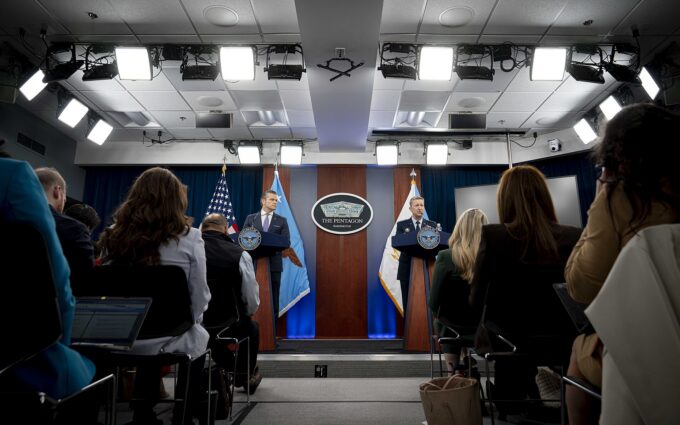
Photograph Source: Benjamin D Applebaum – Public Domain

Imperial systems historically fall by the weight of their insatiable greed, reckless wastefulness and institutional hubris. Today, the United States stands as the sole imperial power, with Israel—the last remaining colonizing state—serving as its vanguard in West Asia. Both are showing the first signs of fundamental decline.

A single miscalculation can forge a new reality.  Driven by imperious delusions, the US and Israel launched deadly wars of choice against Iran in June 2025 and again in February 2026.  The folly of their acts was believing that Iran, a civilizational nation, could be easily defeated. Instead of a swift victory, the flawed assumption has triggered a wider regional quagmire and undermined America’s global power and credibility.

After eight months of military and economic turmoil, the ongoing war is an existential crisis for both Iran and the United States.

For 47 years, the United States and Israel have been a threat to Iran.  Tehran is mindful that Washington and Tel Aviv are bent on destroying the country, and that the war is an existential fight it must win. The start of Operation Epic Fury, on February 28, was the Islamic Republic’s 9-11.

Iran also knows that it cannot continue to live with America’s threatening regional presence (40,000 to 50,000 U.S. soldiers stationed across at least 19 bases) and with the crippling economic sanctions that have hindered development.

In addition, after a long track record of betrayals, Iranian leaders are keenly aware that the U.S. is not interested in honest negotiations or peaceful coexistence. By starting an unprovoked war that violated international law, destroyed vital infrastructure, and killed 3,468 Iranians—including Supreme Leader Ayatollah Ali Khamenei, members of his family and senior leadership—Washington proved it cannot be trusted.

Concurrently, the United States is desperately trying to hold onto its military and economic supremacy.  Both Washington and Tel Aviv had little idea when they started the war that they had set in motion a revolutionary shift, regionally and globally. The unrestrained devastation has shattered the illusion of U.S.-Israeli political, economic and military invincibility that has remained unchallenged for 81 years.

Since emerging as the strongest economy following World War II, the American empire has maintained its prosperity and hegemony through resource exploitation, global militarization, strategic partnerships with merciless regimes, the promise of trickle-down wealth and subtlety-managed domestic indoctrination.

American supremacy has relied heavily on dollar hegemony. By making the U.S. dollar the default currency for global commerce, Washington secured an exaggerated structural advantage that has underpinned its wider geopolitical leverage.

This is particularly true in West Asia, where the dollar, pegged to petroleum —the currency used worldwide in the oil trade since the 1970s—has been employed to exert control over countries in the region.

In July 1944, at Bretton Woods, a new international financial system, centered around the dollar, was established by the United States.  Countries agreed to link the value of their currency to the greenback, and institutions like the International Monetary Fund and World Bank were created under U.S. leadership, governance and control.

Because financial transactions are typically processed through U.S-dominated institutions, like SWIFT (Society for Worldwide Interbank Financial Telecommunication), an electronic interbank payment platform, dollar dominance gives Washington expansive power to impose far-reaching sanctions against other countries and to freeze them out of the global economy.

The United States has weaponized its currency by imposing sanctions and blocking perceived adversaries, like Iran, from SWIFT, using economic isolation to achieve economically what it has failed to do militarily.

As the U.S. and Israel witness their historic chokehold over global resources and defense capabilities slip away, they have reacted with fierce ruthlessness against Palestinian resistance, Iran, Hezbollah in Lebanon and Ansar Allah in Yemen, who are fearlessly contesting their hegemony.

For decades, the United States has preserved its global power through unholy alliances with Israel and through military and economic partnerships with authoritarian Arab regimes, tasked with containing regional opposition.

The Zionist colony was originally embedded in West Asia to protect British imperial interests.  Following Britain’s decline, Israel secured another willing benefactor.  It has served America as a projection of U.S. power in the region for decades.

Paradoxically, Tel Aviv’s long-sought war against Iran might actually trigger its own ruin, topple Arab dictators, and shatter America’s regional and global supremacy.

The coordinated U.S.and Israeli attacks on Iran set off long-standing anti-imperialist sentiments across the region.  These revolutionary undercurrents emerged in 1979 when Iran rejected foreign domination, overthrew the U.S.-backed Pahlavi monarchy, and asserted its independent sovereignty.

For 47 years, the U.S. has been conducting economic warfare against the Islamic Republic through comprehensive, economically destructive sanctions.

In 2008, Iran was cut off from CHIPS (Clearing House Interbank Payments System); and in 2012, all Iranian banks were disconnected from SWIFT. To counter the devastating effects of being cut off from the international financial network, Iran has been forced to change strategies and to seek alternative partners, specifically Russia and China.

In an effort to overcome the impact of U.S. sanctions, Iran became a full member of China-led BRICS, joining Brazil, Russia, India, China and South Africa in January 2024. Tehran has been urging the bloc to adopt alternative payment systems and national currency settlements to bypass the U.S. dollar and mitigate Western sanctions.

The U.S.-Israel plan for reshaping the region was laid out long ago. In a 1996 policy document titled, “A Clean Break: A New Strategy for Securing the Realm,”  senior national security officials, neoconservative hardliners, argued that Israel’s security would be best served, not through the pursuit of peace, but through “regime” change in surrounding countries, starting with Iraq, then Syria and finally Iran.

The enduring geopolitical campaign to restructure West Asia by crushing resistance and establishing absolute U.S. and Israeli dominance finally reached its peak in 2026 with the Iran war.

The urgency of “securing the realm” was reflected in a nativist speech by Secretary of State Marco Rubio delivered in the shadow of the Parthenon in Athens; significantly on October 7 (anniversary of the Palestinian rebellion in Gaza). In addition to extolling its virtues, Rubio stated that Western civilization was at a critical “inflection point” in which the U.S. and Europe must rediscover the values of exploration and conquest that once drove centuries of expansion or face decline or irrelevance.

One passage in particular reveals the jingoistic and arrogant path the United States has been on in West Asia for decades:

And now, today, we find ourselves at a crossroads. Because the next decade and the decision we make will write the story of the next century.  The course we take will determine whether the West maintains its place at the head of the world or resigns itself to a future of atrophy and servitude or decline.  We will either choose to act now or lose the choice to act at all….We choose the unapologetic pursuit of national power: to take back control of our critical supply chains (translated as the Strait of Hormuz in the Persian Gulf and Bab al-Mandeb in the Red Sea), to reindustrialize our economy…to rebuild our defense, to fight for dominance of the technologies and industries of the future.

The U.S. and Israel have chosen the “unapologetic pursuit of national power” in the resource-rich region.  Only now have they met their asymmetrical military match in the Islamic Republic, Ansar Allah and Hezbollah, and in the determination of Palestinians to resist subjugation.

The United States has demonstrated that it is incapable of equality; of being one nation among many. It irrationally insists on “maintaining its place at the head of the world,” no matter the cost in lives and treasure.

Dr. M. Reza Behnam is a political scientist who specializes in comparative politics with a focus on West Asia.  

CounterPunch.org: Bankrolling American Empire in the Philippines:m30-10-2026: ************

 October 30, 2026

Bankrolling American Empire in the Philippines

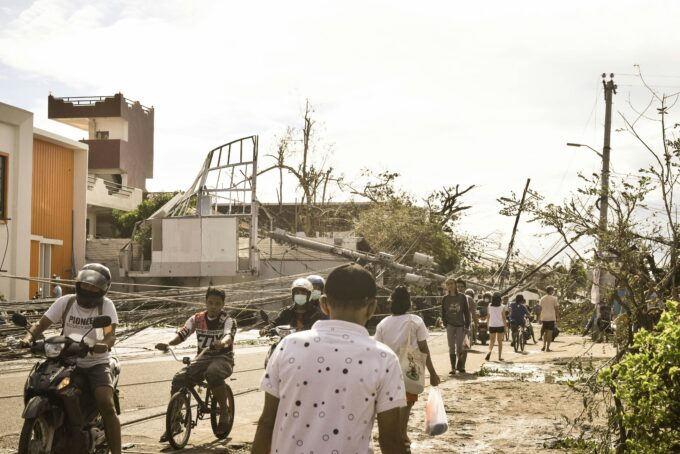
Image by Carl Kho.

During the Cold War, the Subic Bay Naval Base in the Philippines was a key enabler of U.S. military operations in the Pacific and beyond. It served as a critical support facility for the U.S. war in Vietnam and a transit point for U.S. weapons destined for American military personnel in the 1991 Persian Gulf War. That all changed in June of that year, when the Philippine Congress, under pressure from a grassroots anti-bases movement, refused to renew the lease for Subic Bay and other U.S. outposts in that nation.

After the closing of U.S. bases, military relations between the U.S. and the Philippines were conducted indirectly through arms transfers, joint training exercises, and deployments of Special Operations forces to aid Philippine counterinsurgency efforts, rather than by the permanent presence of tens of thousands of troops. The relationship was codified in 1999, when Washington and Manila entered into a Visiting Forces Agreement, which eased the movement of U.S. troops and equipment in and out of the Philippines and put U.S. personnel in the country under the jurisdiction of U.S. rather than Philippine authorities.

But now Subic Bay is back in play as part of a new expansion of the U.S. military presence in the Philippines. And this time around, private capital is financing these empire games.

Military Might Versus Human Rights

The long-standing U.S. military ties with the Philippines have come at a high price for the residents of that nation. Washington’s military and economic interests there have prompted it to look the other way as repressive leaders like Ferdinand Marcos and Rodrigo Duterte engaged in systematic human rights abuses against their own people.

To its credit, the Reagan administration eventually cut ties with Marcos — who was overthrown through peaceful protests known as the “People Power” revolt in 1986 — throwing its support behind his democratically elected opponent, Corazon Aquino. But there was no such shift with respect to Duterte, whose regime ruled the Philippines from 2016 to 2022, and engaged in extrajudicial killings of thousands of Filipinos, including journalists and land reform activists, all under the guise of a “war on drugs.” Duterte is now under indictment by the International Criminal Court, which has cited him for “the crimes against humanity of murder and attempted murder.”

While Marcos and his family fled the Philippines in the 1980s, his son — Ferdinand Marcos Jr. — returned and, in 2022, won the presidency in a landslide, in part by promising to continue some of the strongman policies introduced by Duterte. According to Human Rights Watch, since the younger Marcos took office:

Serious human rights violations have continued in the country largely unabated, including arbitrary arrests, extrajudicial killings and enforced disappearances by security forces. The murderous ‘war on drugs’ has continued, though with fewer killings. Leftist civil society activists, journalists, environmentalists, Indigenous leaders, trade unionists, and left-wing politicians remain under serious, at times deadly, threat.

During the Biden presidency, the U.S. expanded a 2014 pact — the Enhanced Defense Cooperation Agreement — which gave the U.S. military access to five major sites in the Philippines. In 2023, the number of bases was expanded to nine. The State Department has described the scope of the EDCA as authorizing “U.S. forces access to agreed locations in the Philippines on a rotational basis, for security cooperation exercises, joint and combined military training activities, and humanitarian assistance and disaster relief activities.” That official summary fails to admit the real reason for the signing of the EDCA: to give the U.S. access to territory that can be used in a future war with China.

The Privatization of Subic Bay

Building on his predecessor’s enhanced cooperation with the Philippines, President Donald Trump, who had been a staunch Duterte supporter, has pursued even tighter ties with Marcos’s government. This has been driven, in significant part, by the desire to use the Philippines as a platform for potential U.S. military interventions in the Pacific region and further economic penetration of Asia.

As part of the accelerating security partnership between the U.S. and the Philippines, military activities at Subic Bay have resumed. But this time, formal access has been secured by a private investment firm, Cerberus Capital Management, which controls the area through a 50-year lease granted through collaboration with a Philippine company, Agila.

A report by the New York Committee for Human Rights in the Philippines, a member of the International Coalition for Human Rights in the Philippines, summarized current activities at Subic Bay:

In mid-2025, the U.S. Congress approved a plan to build a forward operating base and ammunition production facility in Subic Bay. It is projected to be the world’s largest weapons hub. … The shipyard [is home to] HD Hyundai Heavy Industries, deep sea fiber optic data cables manufacturer Sub Com, defense contractor V2X and the Philippine Navy, which operates a portion of the facility.

Cerberus has strong ties to the Trump administration, first and foremost through its founder, Stephen Feinberg, who is deputy secretary of the Department of War, second in command at the Pentagon behind Pete Hegseth. In that role, Feinberg oversees the Pentagon’s Office of Strategic Capital, which makes loans to military tech companies, many of which are current or former Cerberus clients.

Feinberg “earned” his position the old-fashioned way — by giving millions to Rebuilding America Now, a super PAC devoted to supporting Trump, and hosting a $50,000-a-plate fundraiser, the proceeds of which also went to support candidate Trump in 2016.

Bloomberg News has identified four other former Cerberus executives now in key positions at the Pentagon: David Lorch, director of the OSC; George Kollitides, a special government employee who is simultaneously a director of D. Boral Acquisition, a company that brokers mergers and acquisitions in the weapons sector; and senior Pentagon advisers John Gallagher and Tom Rakusan.

On the other side of the revolving door, Cerberus has hired major Republican figures like former Treasury Secretary John Snow and former Vice President Dan Quayle, who serves as chair of the company’s global investment unit. Given these connections, the Pentagon is all-in behind Cerberus’s activities in the Philippines. But this has prompted a backlash. Activists in the Philippines and beyond are speaking out against the role of Cerberus, calling for public pension funds to withdraw their investments in the company for underwriting the militarization of the Philippines.

Another important avenue of increased cooperation between the U.S. and the Marcos government is the Philippines’ participation in Pax Silica, a U.S.-initiated cartel that the State Department describes as its “flagship effort on AI and supply chain security, advancing new economic security consensus among allies and trusted partners.” And by “supply chain security,” the declaration primarily means “reducing dependence on China” for critical minerals needed to feed and sustain the computing power now central to the Pentagon and the U.S. arms industry.

In addition to the Philippines, there are 24 other participants in Pax Silica, including two other key Asian partners, India and Japan, as well as Taiwan, which is an associate member of the cartel. Jacob Helberg, a former adviser to military tech giant Palantir who now serves as the State Department’s point person on Pax Silica, has stressed that the initiative goes well beyond just securing the supply of specific critical resources. “If the 20th century ran on oil and steel, the 21st century runs on [computing power] and the minerals that feed it,” he said. “This declaration [announcing Pax Silica] hails a new economic security consensus ensuring aligned partners build the AI ecosystem of tomorrow — from energy and critical minerals to high-end manufacturing models.”

The China Syndrome

Although it supplies many other benefits to U.S. corporations and America’s national security state, the enhanced effort to bring the Philippines more securely into the U.S. military, political and economic orbit is all rationalized as moves toward reining in China’s economic and military power and garnering Manila’s support in a possible war between China and the U.S.

The policy of economic warfare and aggressively preparing for a military conflict with China could not be more misguided. The oft-cited “need” to posture U.S. forces to do battle with China over Taiwan ignores the fact that there are diplomatic means of preventing such a conflict.

What is needed is a joint understanding on the status of Taiwan. For over 40 years, peace in the Taiwan Strait has been maintained through the U.S.–China agreement that Washington will not take steps toward recognizing Taiwan as an independent state and China would agree not to resolve the issue of Taiwan by force — the so-called “One China” policy. That agreement has been weakened by actions taken during both the Biden and Trump administrations. The simplest and best way for Washington and Beijing to avoid a war over Taiwan would be to revert to the “One China” policy.

China does not pose a direct military threat to the United States. Its last major war was its invasion of Vietnam in 1979, a conflict in which its troops were badly beaten by battle-hardened Vietnamese forces. The U.S. also spends almost three times as much on its military as China does, and is far ahead of Beijing in numbers of advanced combat aircraft, naval firepower, and nuclear weapons.

In areas where China might be a peer competitor with the U.S. military, like AI-driven weapons, there need to be some rules of the road on how such systems can be used. Using trade wars and military buildups as the primary U.S. tool for influencing China simply will not work. The likely result of persisting in such an approach will be a dangerous arms race and an increased risk of outright war.

A more productive approach to U.S.–China relations would be to seriously explore cooperation on central issues like arms control, addressing the climate crisis, and stabilizing the global economy. There would still be a U.S. military strategy for the Asia–Pacific region, but it should be genuinely defensive in nature, a posture that could save hundreds of billions of dollars in the years to come.

Pursuing a more balanced policy toward China would open the way to developing more equal, less exploitative relations with the Philippines and other nations in the Pacific, and it would allow Washington to finally take a genuine interest in promoting human rights and opposing repression as central pillars of U.S. international relations.

At a time when armed conflict and threats of war are the bedrock of U.S. policy, from the Western Hemisphere to the Middle East, a shift toward diplomacy seems daunting. But it is the only way forward if we want to move toward a more peaceful world where no one nation or group of nations dominates, and where corporations aren’t bending foreign and domestic policies to their will.

This piece first appeared on TomDispatch.

William D. Hartung is the director of the Arms and Security Project at the Center for International Policy and a senior adviser to the Security Assistance Monitor and a columnist for the Americas Program.